
Last updated September 11, 2026
Full 25-point door and opener safety check with every visit - springs, cables, rollers, tracks, and your LiftMaster or Chamberlain opener included
You get a price before we start. It does not change when the truck arrives.
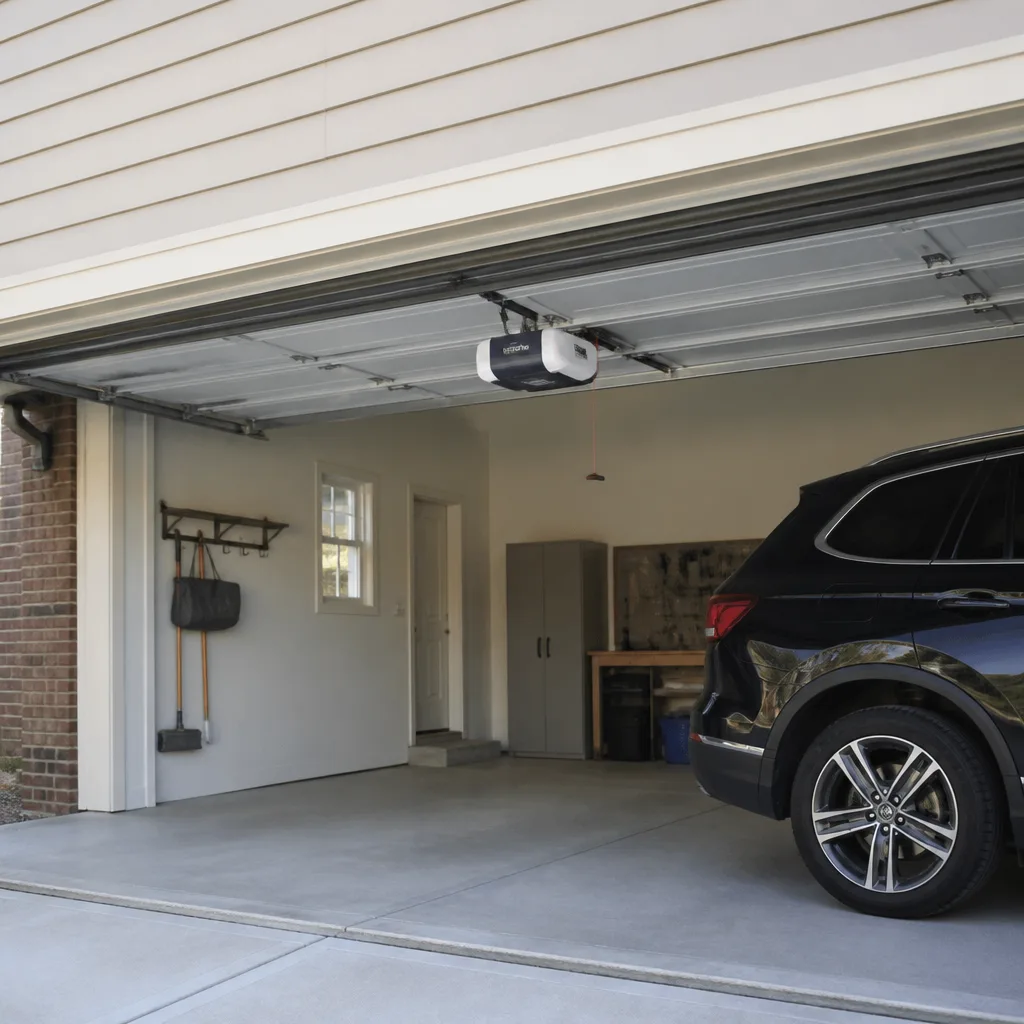
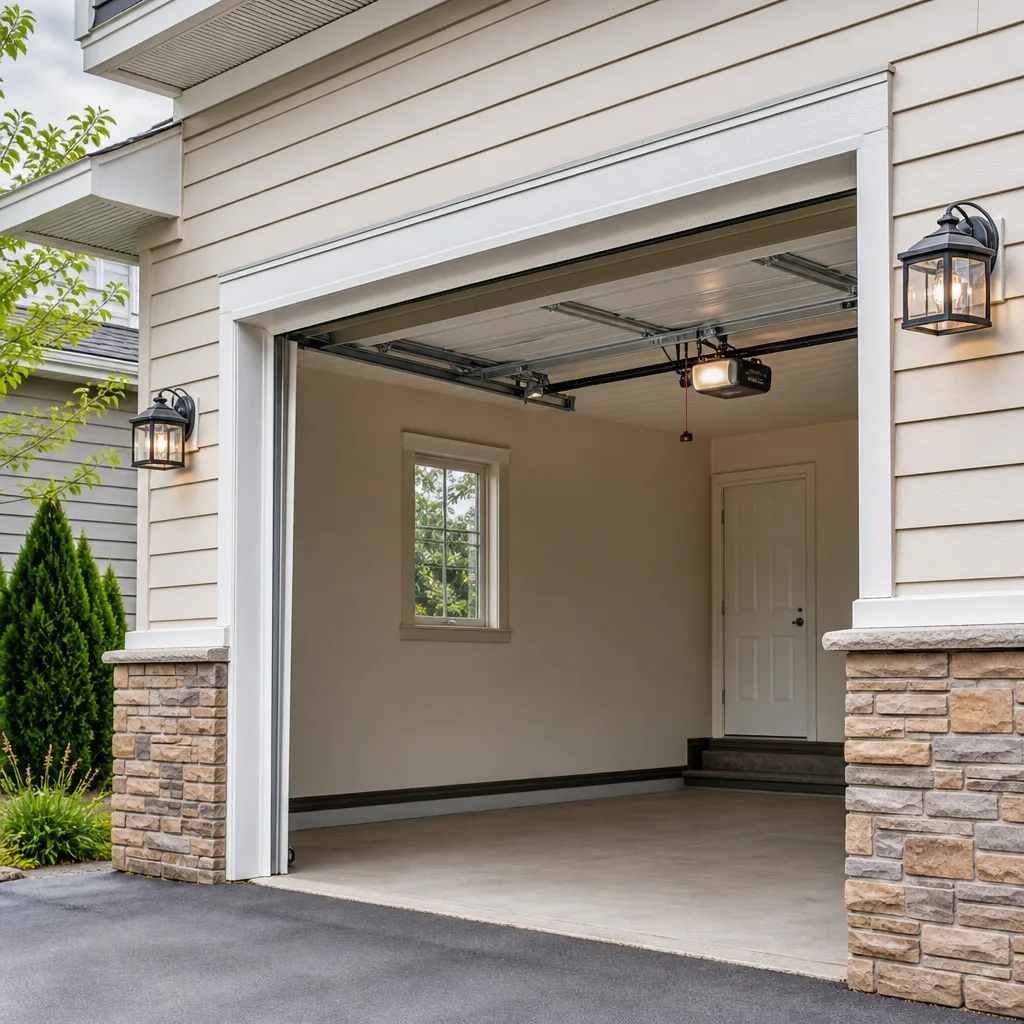
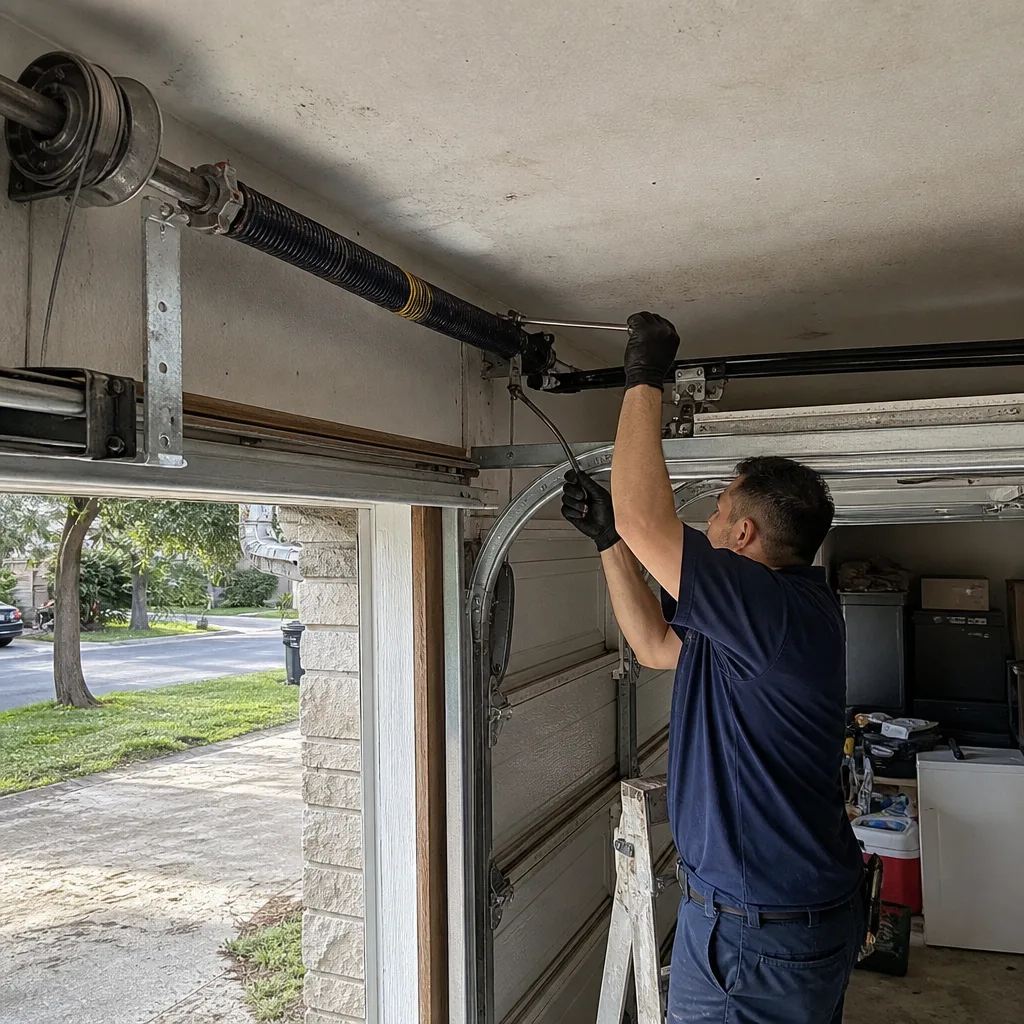 Before
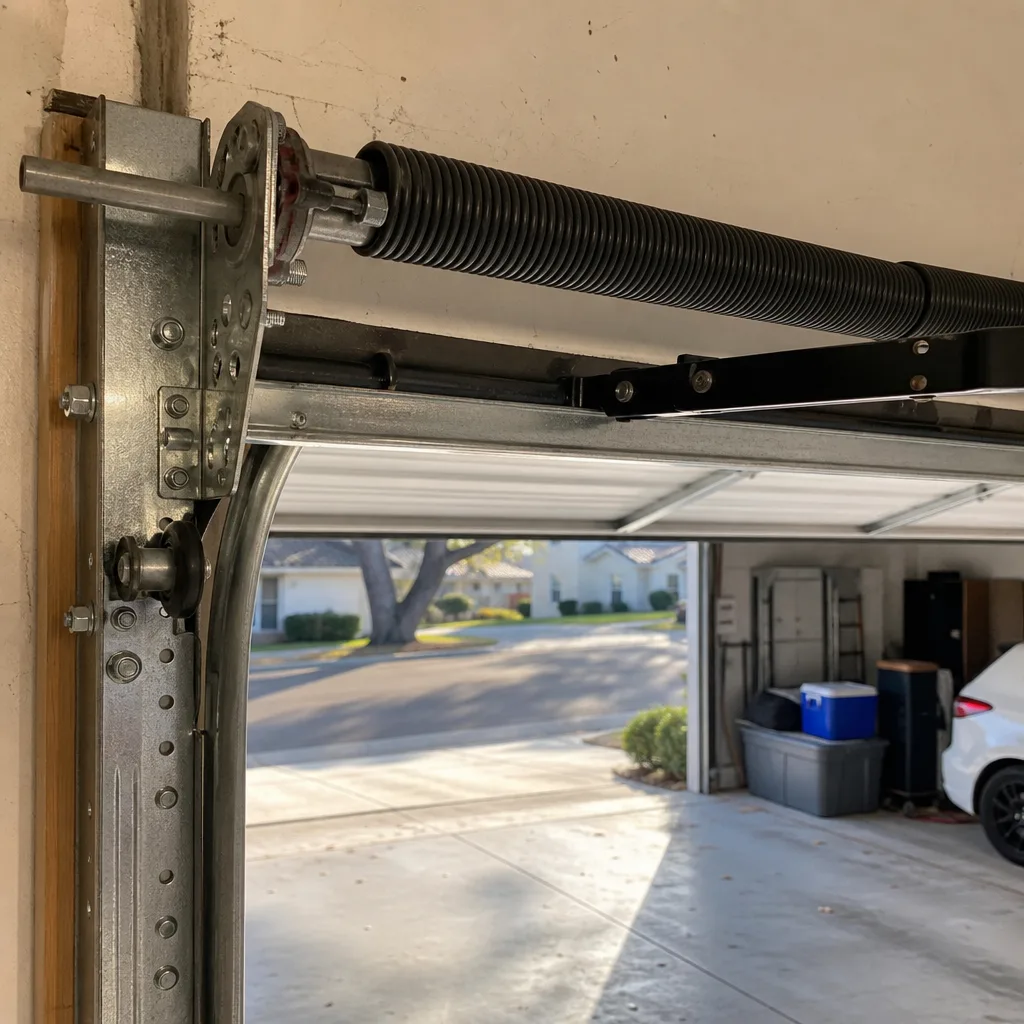 After
After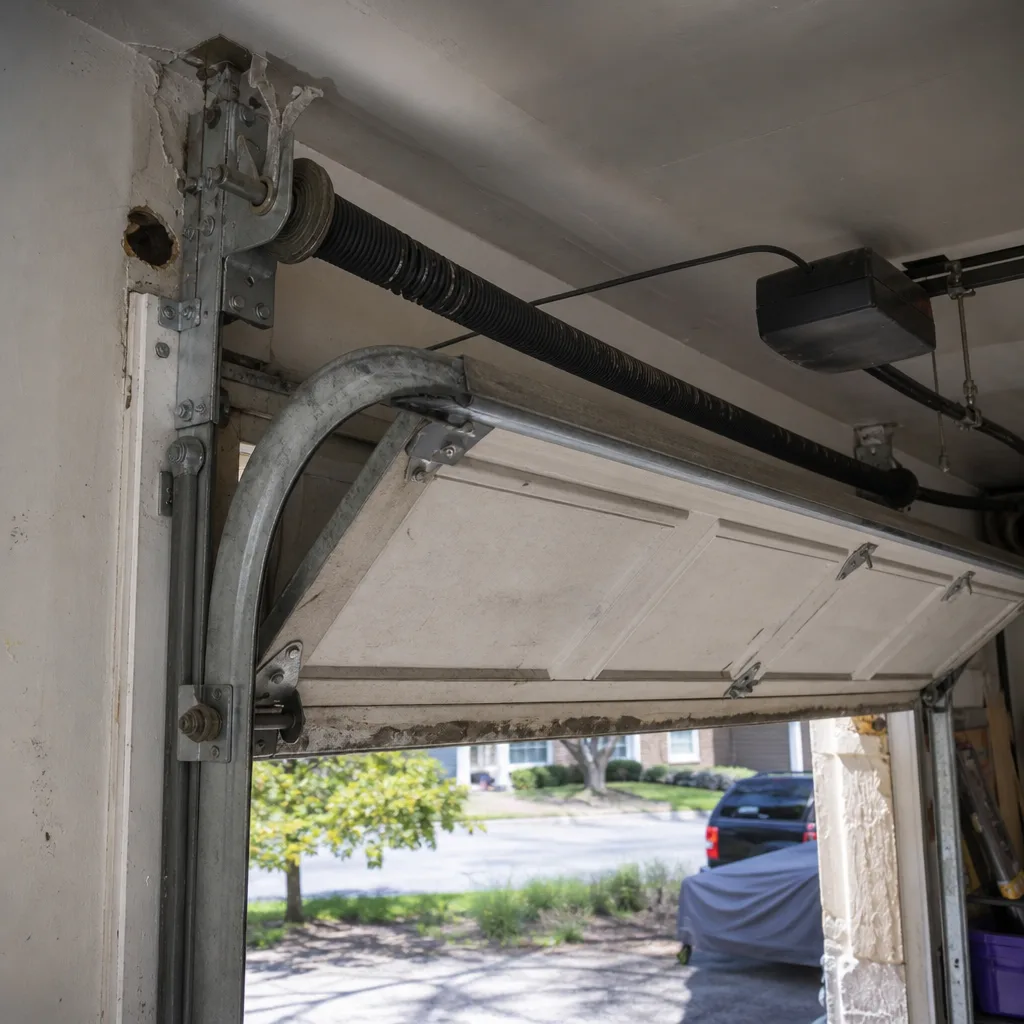 Before
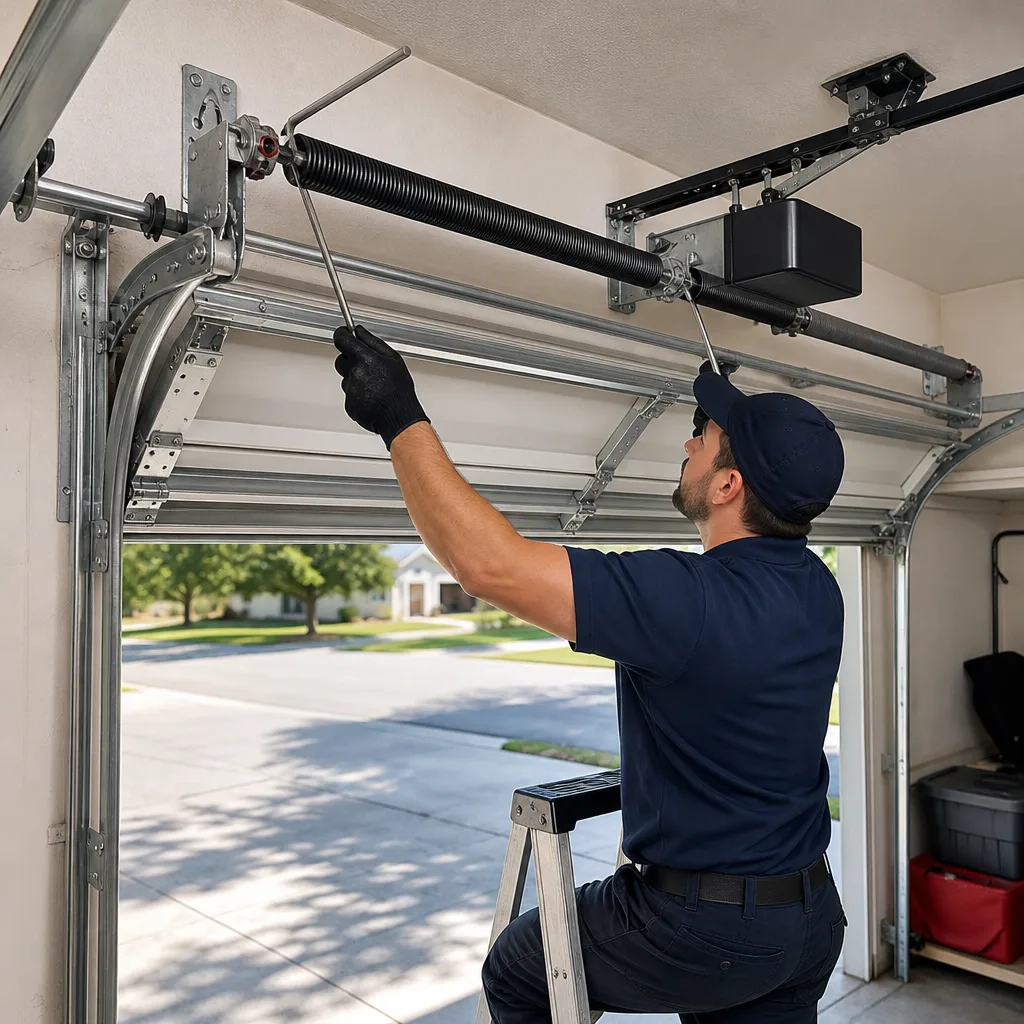 After
After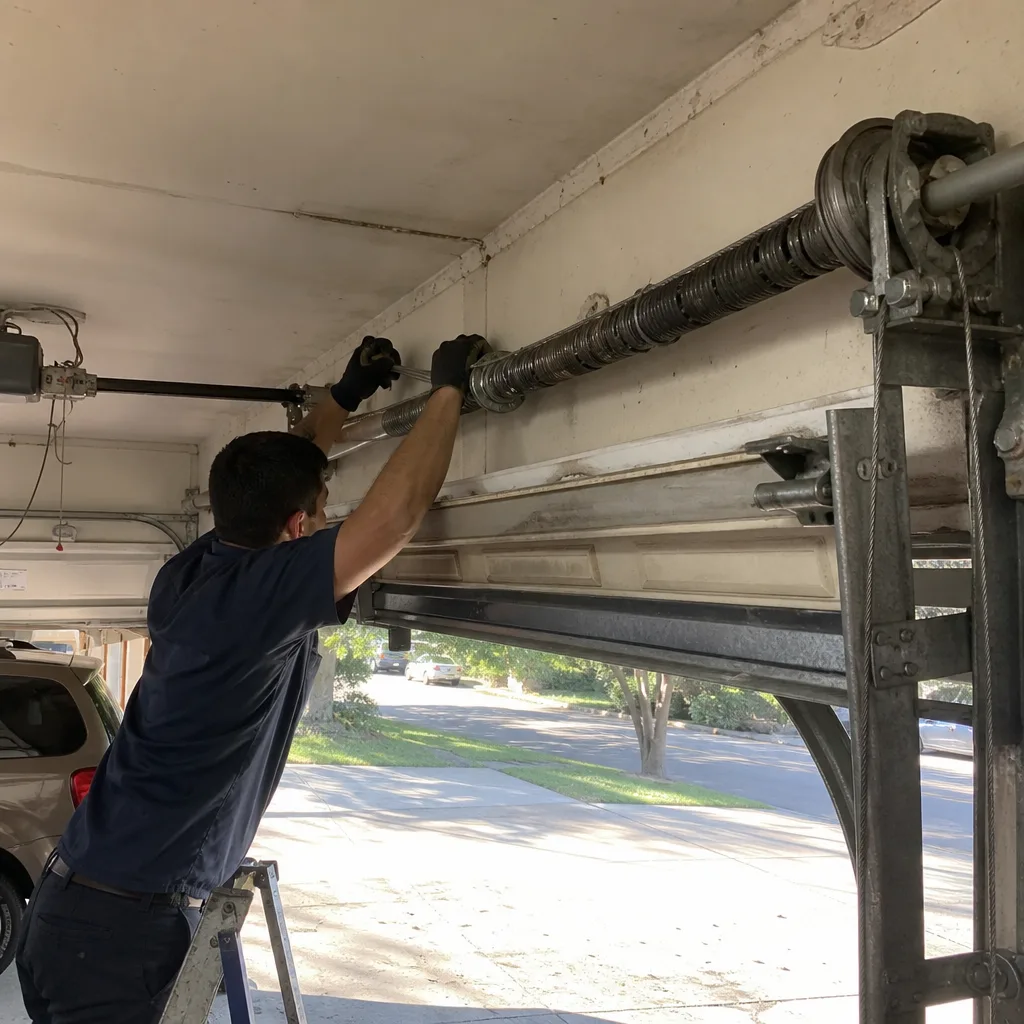 Before
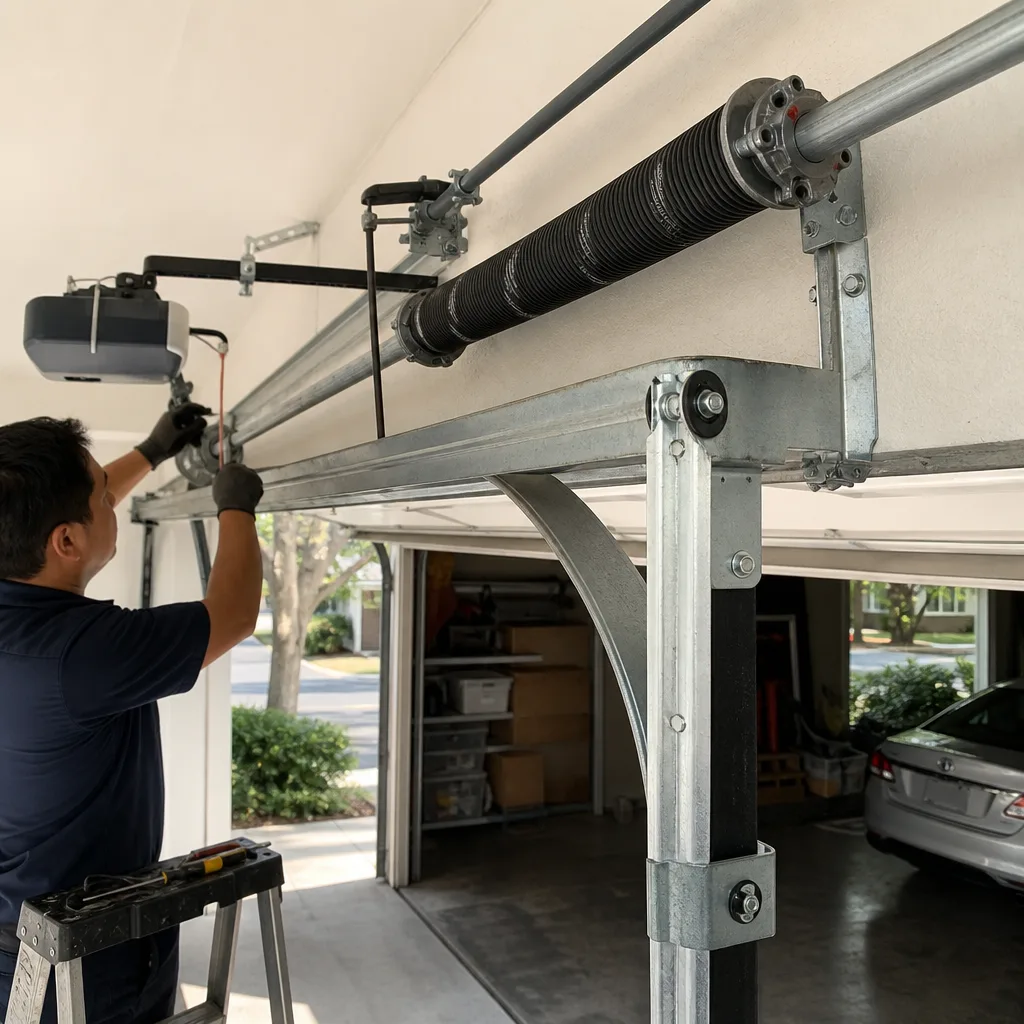 After
AfterDIY vs Professional Garage Door: The Alamo Heights Homeowner’s Decision Guide
A torsion spring on a standard residential garage door stores roughly 10,000 foot-pounds of torque. That is enough energy to sever a finger or fracture a wrist before the person realizes what happened. In Alamo Heights, where many homes were built between the 1950s and 1980s and still run original hardware, we have responded to calls where a homeowner’s Saturday project turned into an emergency room visit by Sunday morning. This guide draws a clear line between what you can safely handle yourself, what demands professional training and tools, and where Texas code makes the decision for you.
Quick Answer
Most Alamo Heights homeowners can safely perform monthly visual inspections, lubrication, and weatherstripping replacement. Torsion spring repair, cable replacement, and opener electrical work should be left to professionals due to injury risk and Texas licensing requirements. The break-even point on DIY versus professional repair typically falls between $200 and $400 in parts and tool investment, not counting the cost of a failed first attempt.
Table of Contents
- Garage Door Tasks by Risk Tier
- The Real Cost of DIY: Tools, Parts, and Failed Attempts
- Where Texas and Bexar County Code Draw the Line
- Hidden Costs: Warranty Voids and Insurance Gaps
- The Four-Question Honest Competence Checklist
- Safe DIY Maintenance Every Alamo Heights Homeowner Can Do
- Common Mistakes to Avoid
- When to Call a Professional
- Frequently Asked Questions
- The Bottom Line
Garage Door Tasks by Risk Tier
Online guides often sort garage door work by “difficulty,” which is the wrong frame. The correct sorting is by consequence of error. A mistake while painting your door costs time. A mistake while winding a torsion spring can cost you a hand.
Tier 1: Reasonable Homeowner Territory
These tasks carry low injury risk and have no meaningful consequence if done imperfectly on the first try.
- Visual inspection of tracks, rollers, and hinges for wear or debris
- Lubrication of rollers, hinges, and torsion spring with silicone-based spray (never WD-40 on springs)
- Weatherstripping replacement on the bottom and sides of the door
- Remote battery replacement and reprogramming
- Photo-eye cleaning and realignment (the two small sensors near the floor)
- Manual release cord operation testing
In Alamo Heights, the caliche soil and occasional flash flooding mean photo-eyes get knocked out of alignment more often than in other San Antonio-area neighborhoods. The ground shifts slightly after heavy rains, and a sensor that was true in April may be blinking red by June. Realignment takes ten minutes and a soft cloth.
Tier 2: Experienced DIY with Proper Tools
These tasks are mechanically straightforward but require specific tools and carry moderate risk of property damage if done wrong.
- Section panel replacement (non-spring-loaded components)
- Track realignment on a door with extension springs (not torsion)
- Decorative hardware installation
- Insulation kit application to existing flat panels
The distinction between extension and torsion spring systems matters here. Extension springs run parallel to the horizontal tracks and are under tension only when the door is closed or partially open. Torsion springs sit on a steel shaft above the door and are under tension at all times. We see this confusion regularly in the Terrell Hills and Olmos Park areas, where 1960s ranch homes often have extension systems and newer construction has torsion. If you are not certain which system you have, stop and call.
Tier 3: No Reasonable DIY Category
These tasks carry high injury risk, require specialized tools most homeowners do not own, and in some cases violate Texas code when performed by an unlicensed individual.
- Torsion spring repair or replacement. The winding bars must be solid steel, precisely sized to the shaft diameter, and inserted fully before any tension is applied. We have seen homeowners use screwdriver shafts, adjustable wrenches, or pipe clamps as substitutes. Each of these has failed catastrophically in our experience.
- Cable replacement on a torsion system. Cables are under full spring tension even when the door is closed. Proper unwinding requires two winding bars and knowledge of how many quarter-turns are on the spring.
- Opener electrical circuit modification. Texas Occupations Code Chapter 1305 requires a licensed electrician for any new circuit installation or modification to an existing garage door opener circuit beyond simple plug replacement.
- Bottom bracket replacement on a torsion door. The bottom brackets connect to the lifting cables and are under spring tension. This is the most common point of serious injury we encounter.
The physics deserve emphasis. A standard 16-foot wide, 200-pound steel door in an Alamo Heights home built in 1975 requires roughly seven to eight quarter-turns of tension on a torsion spring. Each quarter-turn stores increasing energy. The winding cone is not a precision fitting; it is a cast iron component that can crack, slip, or eject the winding bar if the operator loses grip or position. We have replaced springs in the Garage Door Repair in Alamo Heights area where the homeowner’s bar had punched through the drywall and lodged in a ceiling joist.
The Real Cost of DIY: Tools, Parts, and Failed Attempts
The internet is full of “$50 garage door fix” tutorials and more guides & resources. What they rarely account for is the full cost of doing the job safely, correctly, and in compliance with warranty terms.
Tool Investment for Common Repairs
| Task | Required Tools | Approximate Cost |
|---|---|---|
| Torsion spring replacement | Solid steel winding bars (2), vice grips, adjustable wrenches, socket set, ladder rated for 250+ lbs | $180-$340 |
| Cable replacement | Same as above plus cable puller, safety glasses, leather gloves | $220-$380 |
| Opener installation | Cordless drill, level, stud finder, wire strippers, ladder | $150-$280 (if owned); $80-$120 (rental) |
| Track realignment | Rubber mallet, level, socket set, ladder | $60-$120 |
These are tool costs only. Parts are additional. A pair of torsion springs for a standard residential door runs $80-$160 depending on wire size and length. Cables are $15-$40. An opener with adequate horsepower for a solid wood or insulated steel door starts around $200 for a basic chain-drive and runs to $450 for a belt-drive with battery backup.
The hidden cost is the failed first attempt. We receive calls weekly from homeowners who ordered springs based on door weight estimates from online calculators, installed them, and found the door still unbalanced or the new springs failing within months. The reasons are predictable: spring wire size was slightly off, the inside diameter did not match the existing cones, or the winding turns were estimated rather than calculated from door height and drum circumference. Each of these errors requires a second parts order and a second round of work. In our experience, about forty percent of DIY spring repairs in the Alamo Heights market result in a professional callback within six months.
The flat cost of hiring Mainspring Garage Door Co. home for the same repair includes correct spring specification, proper winding, safety cable installation where required, and a written warranty. Our Garage Door Repair in Alamo Heights service covers most common repairs in a single visit because our trucks carry the full range of spring wire sizes, cable lengths, and hardware for doors from the 1950s through current construction.
Where Texas and Bexar County Code Draw the Line
Texas does not require a state license for garage door repair specifically. The licensing boundary falls on electrical work and structural modification, and Bexar County enforces these provisions through its building inspection division.
What Requires a Licensed Electrician
- Installing a new dedicated circuit for a garage door opener
- Extending or modifying existing 120V or 240V wiring to the opener location
- Replacing a hardwired opener with a different voltage or amperage requirement
- Installing battery backup systems that tie into household electrical panels
The Texas Department of Licensing and Regulation (TDLR) enforces Chapter 1305 of the Occupations Code, which classifies garage door opener electrical connections as electrical work when they involve anything beyond plugging into an existing receptacle. A homeowner may replace a plug-in opener with another plug-in unit. Changing from plug-in to hardwired, or upgrading to a unit that requires a dedicated 20-amp circuit, requires a licensed electrician and in most Bexar County jurisdictions, a permit.
Alamo Heights operates under its own municipal code, adopted from the International Residential Code with local amendments. The city requires permits for electrical panel work and new circuit installation. A homeowner performing this work without a permit risks a stop-work order, fines starting at $200, and potential complications when selling the home. More critically, unpermitted electrical work that results in fire or injury may void homeowner’s insurance coverage for the incident.
Why the Line Exists
Garage environments present specific electrical hazards: concrete floors increase conductivity, metal door components provide grounding paths, and the combination of moisture from vehicle tracking and 120V current creates genuine electrocution risk. The 2017 NEC (National Electrical Code) update, adopted by reference in Texas, added GFCI protection requirements for garage receptacles precisely because of these conditions. A licensed electrician understands bonding, grounding, and GFCI placement requirements that a typical homeowner does not.
For opener installation that stays within existing receptacle capacity, no license is required. For anything beyond that, the cost of proper permitting and electrical work typically adds $200-$400 to the project. This is not a place to save money by working around the requirement.
Hidden Costs: Warranty Voids and Insurance Gaps
Manufacturer warranties on garage doors and openers contain specific installation requirements. Violating them is easier than most homeowners realize.
Warranty Traps
Clopay, Amarr, and Wayne Dalton each require professional installation for full warranty coverage on their residential door systems. The language varies slightly, but the core provision is consistent: “Damage resulting from improper installation, including failure to follow spring balancing procedures, voids all coverage.” A homeowner who installs their own door and has a panel fail within the warranty period will find their claim denied if the installation records show DIY work.
Opener warranties from LiftMaster, Chamberlain, and Genie are more permissive for plug-in replacement but still require that electrical connections meet local code. A fire originating from an unpermitted hardwired installation voids the product warranty and may trigger an insurance coverage dispute.
Raynor’s commercial and premium residential lines require dealer installation for warranty activation. This is not a technicality; Raynor maintains a dealer network precisely to ensure proper spring specification and safety cable installation. We are factory-familiar with Raynor, LiftMaster, and Chamberlain systems and can verify warranty compliance before beginning work.
Insurance and Liability
Homeowner’s insurance policies contain a “reasonable care” provision that applies to maintenance and repair. If a DIY garage door repair fails and damages a vehicle, injures a person, or causes property damage to a neighbor, the insurer may deny coverage or reduce the payout based on failure to use qualified service. This is not theoretical. In 2019, a Bexar County homeowner’s claim for a vehicle crushed by a falling door was reduced by sixty percent because the insurer established that the homeowner had replaced cables incorrectly six months prior.
The 90-Day Done Right Promise from Mainspring Garage Door Co. exists precisely because we stand behind our work in writing. If a door we repair fails due to our work, we return at no charge. That written guarantee is also documentation for your insurance and warranty records.
The Four-Question Honest Competence Checklist
Generic confidence is dangerous. Before ordering parts for any garage door project, answer these four questions with specific evidence, not gut feeling.
- Have I done this exact task before, successfully, on this type of system? Watching a video is not doing. Doing it once on an extension spring door does not qualify you for a torsion system. Be specific about the spring type, door weight, and hardware generation.
- Do I own every tool required, and do I know the proper use of each? Not “I can probably make this work.” The actual tool, in the correct size, rated for the forces involved. For torsion work, this means solid steel winding bars that fit the winding cone without play, not “I’ll use a screwdriver and be careful.”
- Do I know what I will do if the first attempt fails? This means: how will I secure a partially disassembled door? How will I release tension safely if I have added too much? What is my plan if a component breaks during the process?
- Can I absorb the full cost of failure without financial or physical harm? This includes emergency room costs, vehicle damage, door replacement, and the cost of calling a professional to fix your attempt. If any of these would be catastrophic, hire the professional first.
If you answer “no” or “unsure” to any question, the task belongs in Tier 2 or Tier 3, and you should call. There is no shame in this. We have been training journeymen technicians for decades, and the first thing we teach is recognizing when a job exceeds your current capability.
Safe DIY Maintenance Every Alamo Heights Homeowner Can Do
Regular maintenance prevents most emergency repairs and extends door life by years. In Alamo Heights, where summer temperatures exceed 100 degrees and humidity swings are severe, these steps are particularly important.
Monthly Inspection (10 Minutes)
- Disconnect the opener using the red manual release cord and lift the door halfway by hand. It should stay in place without drifting up or down. If it drifts, the spring balance is off. Call for service; do not attempt adjustment.
- Inspect rollers for cracks, flat spots, or bearing failure. Steel rollers show rust; nylon rollers show cracks or wobble. Replace only if you have the correct replacement type and the door is fully closed with the opener disconnected.
- Check cables for fraying, especially where they wrap around the bottom brackets and drums. Fraying cables are a pre-failure condition. Do not touch them; call for replacement.
- Test the auto-reverse: place a 2×4 flat on the floor centered under the door path. The door should reverse within two seconds of contact. If it does not, the opener force setting needs adjustment. This is opener-specific; consult your manual or call.
Seasonal Lubrication (20 Minutes, Spring and Fall)
- Apply silicone-based spray lubricant to torsion spring coils, roller bearings, and hinge pivot points. Wipe excess. Do not lubricate the track; clean it with a damp cloth instead.
- Tighten all track mounting bolts with a socket wrench. Do not over-torque; snug is sufficient.
- Inspect weatherstripping for hardening or gaps. Alamo Heights sun degrades rubber stripping faster than shaded or northern climates. Replace when it no longer compresses to form a seal.
Our $89 Seasonal Tune-Up covers these items plus spring tension verification, opener force testing, and a written condition report. Many homeowners in the Alamo Heights and Terrell Hills areas schedule this in March and October, before the extreme seasons.
Common Mistakes to Avoid
- Using WD-40 on torsion springs. WD-40 is a solvent and light penetrant, not a lubricant. It strips existing grease and attracts dust, accelerating wear. Use silicone-based spray or white lithium grease.
- Adjusting opener force settings to compensate for a heavy door. This masks spring failure and strains the opener motor. The correct fix is spring rebalancing, not force adjustment. We see this mistake frequently in older Alamo Heights homes where owners want to “get another year” from weakening springs.
- Ignoring a single broken spring on a two-spring door. The second spring is carrying double its designed load and will fail soon, often catastrophically. Replace springs in matched pairs.
- Installing an opener on an unbalanced door. The opener is not a substitute for proper spring tension. An unbalanced door strains the opener, voids its warranty, and creates safety hazards. Always verify balance before opener installation.
- Using mismatched replacement parts. Springs must match in wire size, inside diameter, and length within manufacturer tolerance. Cables must match drum circumference and door height. “Close enough” causes uneven wear and premature failure.
- Working alone on any spring or cable repair. Even professionals work in pairs for torsion spring jobs. A second person can call for help, secure the area, or stabilize components if something goes wrong.
When to Call a Professional
Call when the task involves torsion springs, cables under tension, electrical modification, or any component whose failure could cause injury or significant property damage. Call when you have answered the four-question checklist with any uncertainty. Call when the door is stuck open and your home is unsecured, or stuck closed and you need vehicle access.
Garage Door Installation in Alamo Heights requires precise measurement, proper spring specification, and warranty-compliant installation. Garage Door Opener in Alamo Heights work that goes beyond plug-in replacement should include electrical code verification. Mainspring Garage Door Co. offers free estimates in Alamo Heights. A live person answers every call, 24/7, including nights, weekends, and holidays. Call (830) 364-5701.
Frequently Asked Questions
Professional spring replacement in Alamo Heights typically runs $180-$340 including parts, labor, and warranty, per our Garage Door Cost Breakdown: The Alamo Heights Homeowner’s Reference for 2026. DIY parts alone cost $80-$160, plus $180-$340 in tools if you do not already own them. If the first attempt fails and you call a professional anyway, you have paid both costs. Our $50 Off Any Repair Over $250 standing offer reduces the gap further for qualifying jobs.
Yes, if the replacement plugs into an existing receptacle and requires no new wiring. If your home needs a new circuit, outlet relocation, or hardwired installation, Texas Occupations Code Chapter 1305 requires a licensed electrician and likely a Bexar County permit. Alamo Heights enforces these requirements through municipal inspection.
Not automatically, but insurers may reduce or deny claims for damage caused by repairs that failed due to improper technique. The “reasonable care” provision in most policies expects qualified service for components that carry injury risk. A written professional warranty provides documentation that supports your coverage.
Torsion springs mount on a horizontal steel shaft directly above the door opening. Extension springs run parallel to the horizontal tracks on each side. If you see a coiled spring above the door, you have torsion. If you see stretched springs along the tracks, you have extension. When in doubt, send a photo to a professional before ordering parts.
Torsion spring unwinding and winding causes the most serious injuries we see. The spring stores enough energy to eject a winding bar with lethal force if grip is lost or the bar slips. Bottom bracket replacement on a torsion system is nearly as dangerous because the cables remain under full spring tension. Both tasks should be performed only by trained technicians with proper tools.
Yes. Our trucks carry springs, cables, openers, and hardware for most residential doors, and we complete most repairs in a single visit. Calls are answered by a live person 24/7. For emergency situations, a stuck door, or security concerns, call (830) 364-5701. For scheduled installation or non-urgent replacement, we offer free measurement and written pricing with no same-day pressure.
The Bottom Line
The DIY-versus-professional decision is not about pride or thrift. It is about accurate risk assessment, code compliance, and the total cost of getting it right, including the cost of getting it wrong. In Alamo Heights, where many garage doors have served for thirty or forty years, maintenance and minor adjustments are sensible homeowner work. Spring, cable, and electrical work belong to trained professionals with proper tools, insurance, and written accountability. The square deal is knowing which is which, and making the call that protects your home, your finances, and your safety.
Written by Carl Dutton, Owner at Mainspring Garage Door Co., serving Alamo Heights since 2016.